Slack (Beta)
Slack is a messaging platform that teams use to communicate and collaborate in channels. The Sauce Labs integration with Slack lets you send Sauce Labs test results and alerts directly to your Slack channels, so your team can see important results without having to continuously check the Sauce Labs dashboard. The following sections explain how to set up the integration and use it with your Sauce Labs tests.
This page covers Slack notifications for Sauce Labs test results. To send Backtrace error reports to Slack, see Backtrace Integration for Slack.
How It Works
You connect one or more Slack workspaces to your Sauce Labs organization by authorizing the Sauce Labs app in Slack. After a workspace is connected, you add the Slack channels that should receive notifications. Sauce Labs posts to those channels through the Sauce Labs app (saucebot), which must be a member of each channel.
You control which test results are sent by creating alerts in Sauce Labs. Each alert defines the destination channels, whether results are reported per test or per build, the test statuses that trigger a notification, whose test runs are included, and optional tag filters. When a test result matches an alert, Sauce Labs sends a notification to the selected channels, along with a link back to the result in Sauce Labs. You can also send a single test result to Slack manually from the Test Details page.
The integration is configured and managed entirely in Sauce Labs. You can use it to:
- Send test failures and errors to the appropriate team channels.
- Route results from different automation types to different channels.
- Send aggregated build results instead of individual messages for every test.
- Filter notifications by test status, job owner, or tags.
- Send a specific test result to Slack manually when investigating a failure.
Prerequisites
Before you begin, make sure you have:
- Access to the Slack workspace that you want to connect to Sauce Labs.
- A Sauce Labs account with access to the Integrations page. See Viewing Test Results for where results appear before you route them to Slack.
- Permission to authorize apps in your Slack workspace. A Slack administrator may be required to authorize the Slack integration for your workspace.
Authentication and Permissions
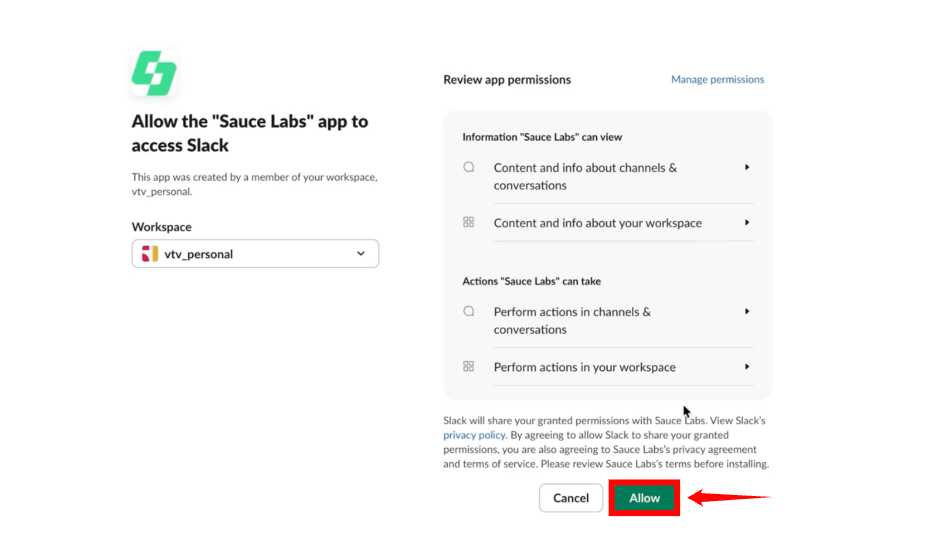
The Slack integration uses Slack's app authorization instead of an API key or token. When you connect a workspace, Slack asks you to authorize the Sauce Labs app and lists the permissions that the app requests:
| Sr. No. | Type | Permission |
|---|---|---|
| 1 | Information Sauce Labs can view | Content and info about channels and conversations |
| Content and info about your workspace | ||
| 2 | Actions Sauce Labs can take | Perform actions in channels and conversations |
| Perform actions in your workspace |
If your Slack workspace restricts app installations, a Slack administrator may need to approve the Sauce Labs app before you can connect the workspace.
To revoke access, disconnect the workspace in Sauce Labs. This also disconnects saucebot from your Slack workspace.
Set Up the Integration
Setting up the integration has three parts: install the Sauce Labs app in Slack, connect your Slack workspace in Sauce Labs, and add the channels that should receive notifications.
Install the Sauce Labs App in Slack
Step 1: Sign in to the Slack workspace that you want to connect to Sauce Labs.
Step 2: From the Slack Marketplace, search for the Sauce Labs integration and install it.
Step 3: Add saucebot as a member of each public channel where you want to receive alerts.
Step 4: Return to Sauce Labs to connect the workspace.
Connect Your Slack Workspace
You can connect multiple Slack workspaces to the same Sauce Labs organization. Connecting another workspace does not replace an existing workspace connection.
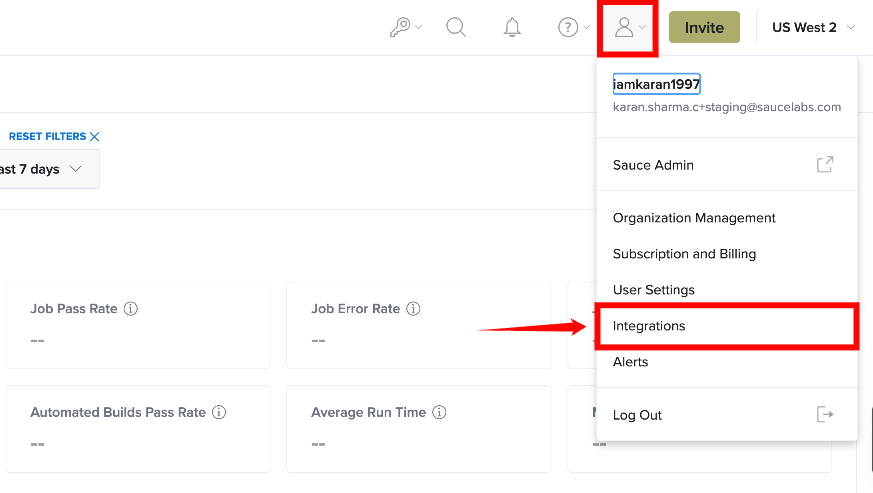
Step 1: Inside your Sauce Labs account, click on your profile icon in the top-right corner, and then select Integrations from the dropdown list.
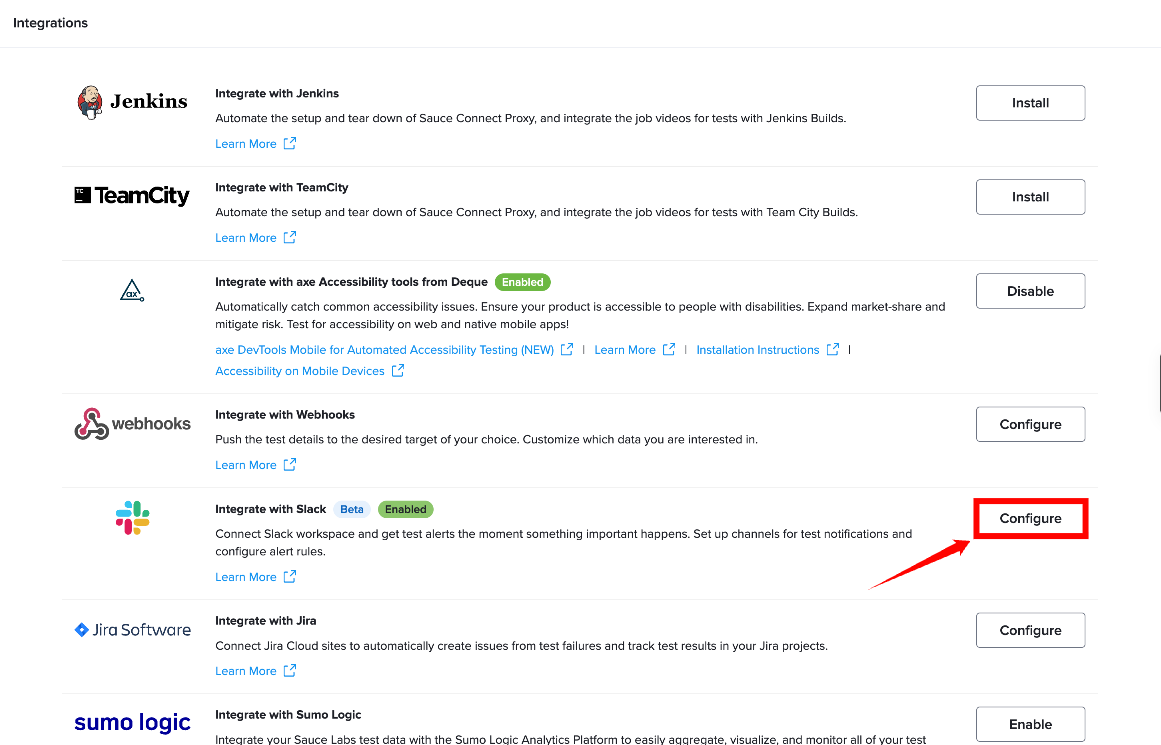
Step 2: Find the Slack integration and click on Configure. The Slack configuration page opens. If you have not connected a workspace yet, the page provides the option to connect one.
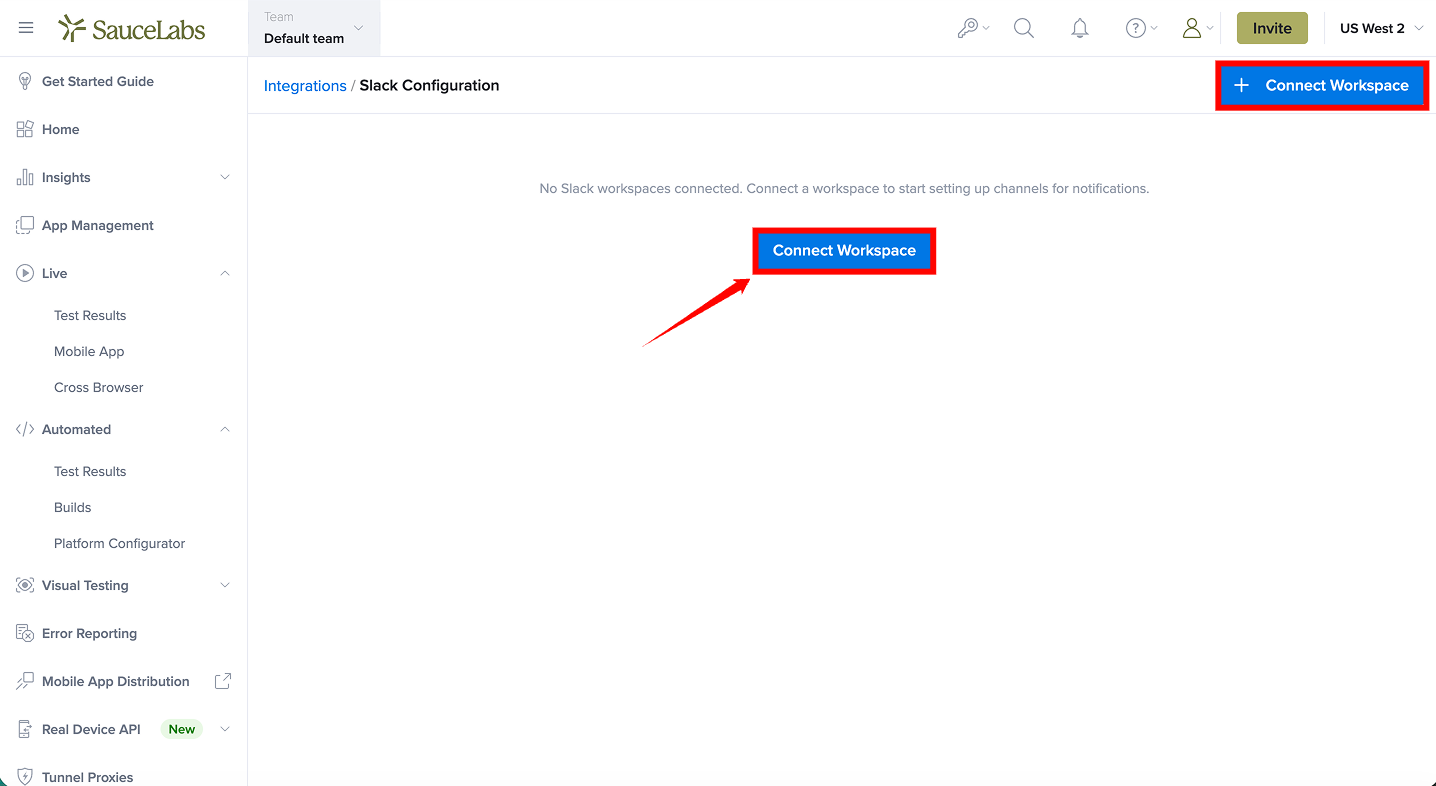
Step 3: Select Connect Workspace. This starts the process of connecting your Slack workspace to Sauce Labs.
Step 4: In the Slack authorization window, select the workspace you want to connect. If you belong to multiple Slack workspaces, make sure you select the workspace where you want to receive Sauce Labs notifications.
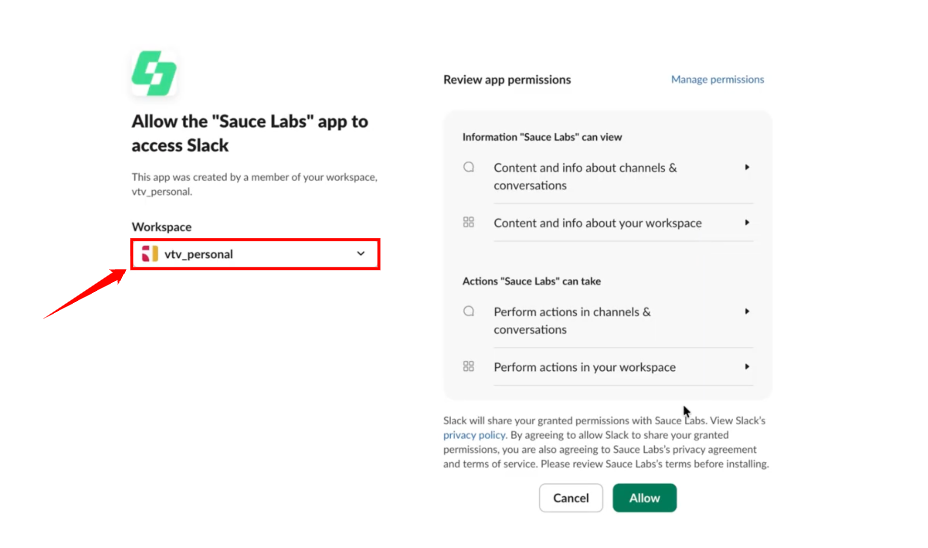
Step 5: Review the permissions requested by the Sauce Labs app. For what each permission covers, see Authentication and Permissions. If the selected workspace is correct, select Allow to authorize the app.
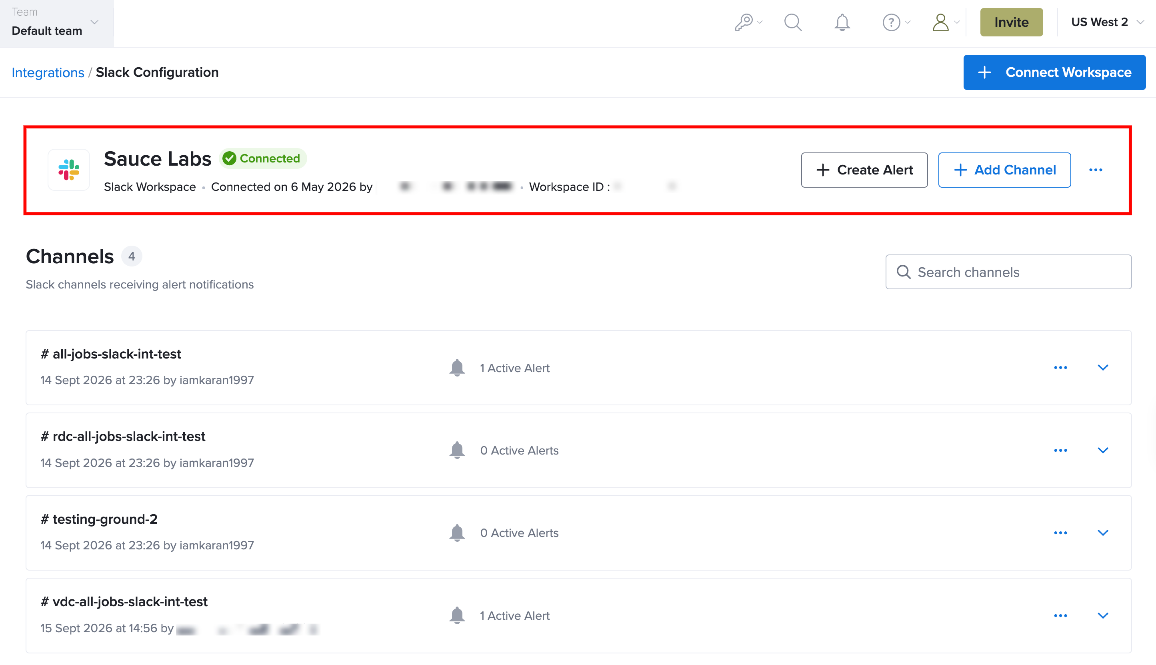
Step 6: After authorization is complete, you are redirected to Sauce Labs, and the Slack workspace is marked as Connected. Next, add the Slack channels that should receive notifications.
If you authorize a workspace that is already connected, Sauce Labs does not create a duplicate workspace connection. Existing channels and alerts are preserved.
Add Slack Channels
Add the Slack channels where Sauce Labs will send test result notifications. You can add multiple channels to the same workspace and use them as destinations when creating alerts.
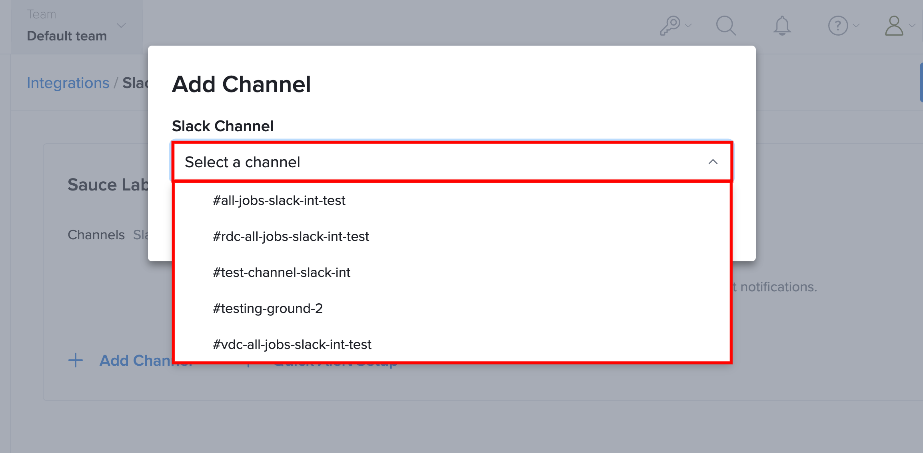
Only public channels available to the Sauce Labs Slack integration appear in the channel list.
To add a Slack channel:
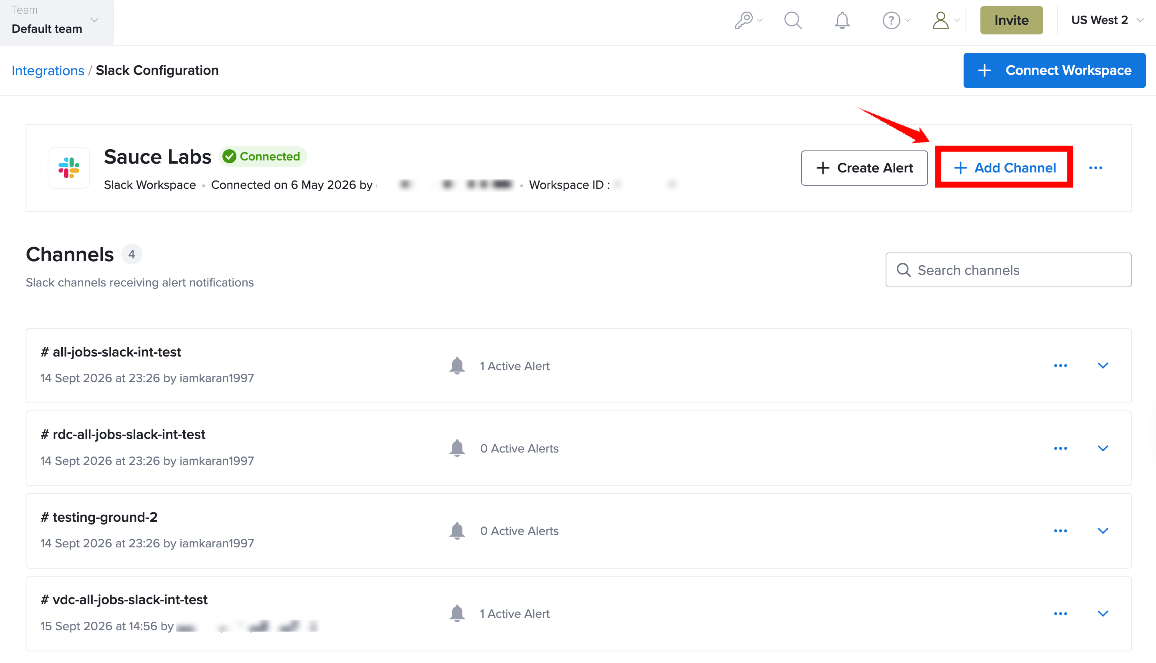
Step 1: In the connected workspace, select Add Channel.
Step 2: In the Add Channel dialog, select the Slack Channel field to view the available channels, and then select the channel where you want to receive Sauce Labs notifications.
Step 3: Click Add Channel.
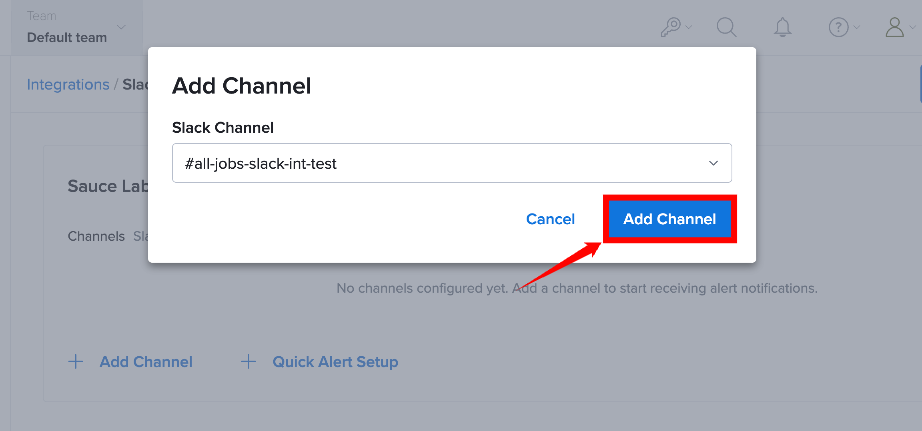
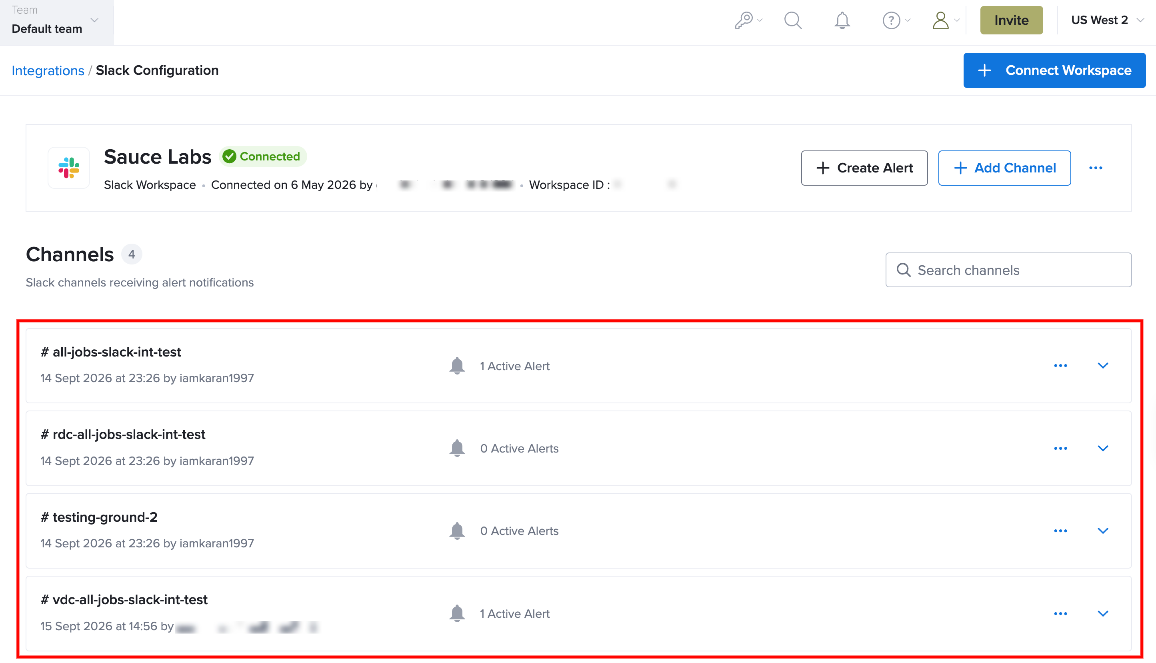
Result: The channel appears in the Channels list, where it can be selected as a destination when you create an alert. To add more channels, repeat these steps. Each channel is added separately.
Verify the Integration
After setup, confirm the integration from both sides:
- In Sauce Labs: On the Slack Configuration page, the workspace card shows the Connected status, and the channels you added are listed under Channels. If the workspace is not connected, see Connect Your Slack Workspace. If a channel is missing, see Add Slack Channels.
- In Slack: Saucebot is a member of each channel you added. If it is not, see Install the Sauce Labs App in Slack.
If either check still fails, see Troubleshooting.
Send Test Results to Slack
After the integration is set up, you can send test results to Slack automatically by creating alerts, or manually from the Test Details page of a test.
Create an Alert
An alert defines which Sauce Labs test results are sent to which Slack channels.
To create an alert:
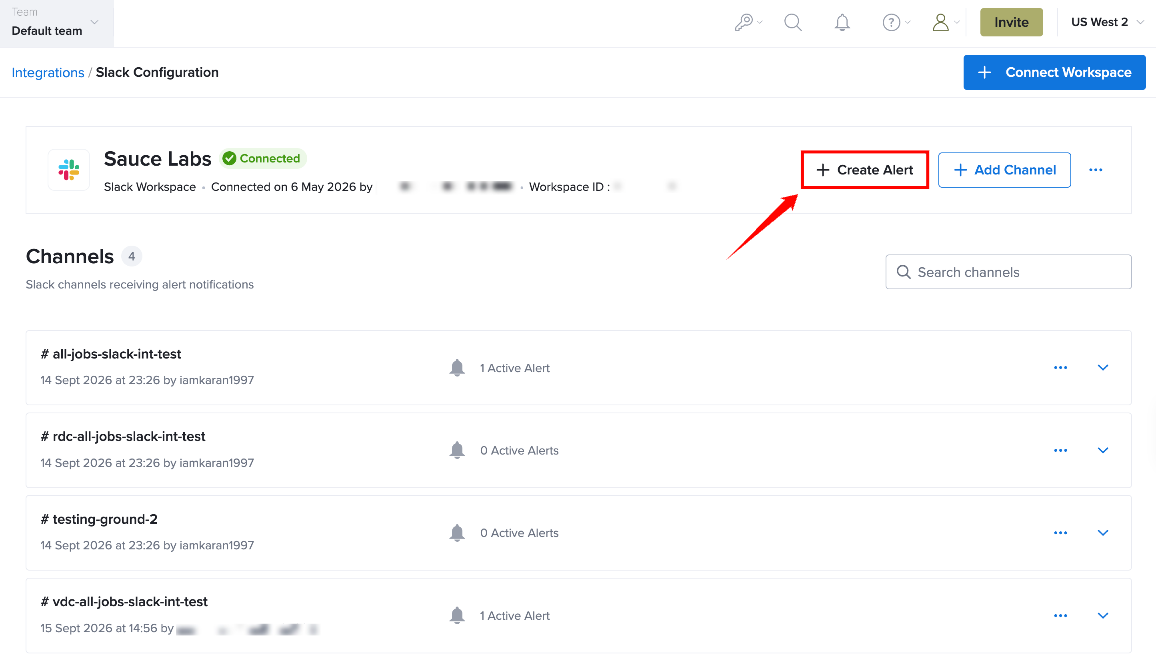
Step 1: On the workspace card, select Create Alert.
Step 2: Enter a descriptive name in Alert Name, such as Critical QA failures. Use a name that identifies the alert when you manage your alerts later.
Step 3: In Channel(s) receiving notification, select the Slack channels that should receive the notification. Only channels that have already been added to your connected Slack workspace are available.
Step 4: Under Type of Reporting, select Build level or Test level. See Reporting Types.
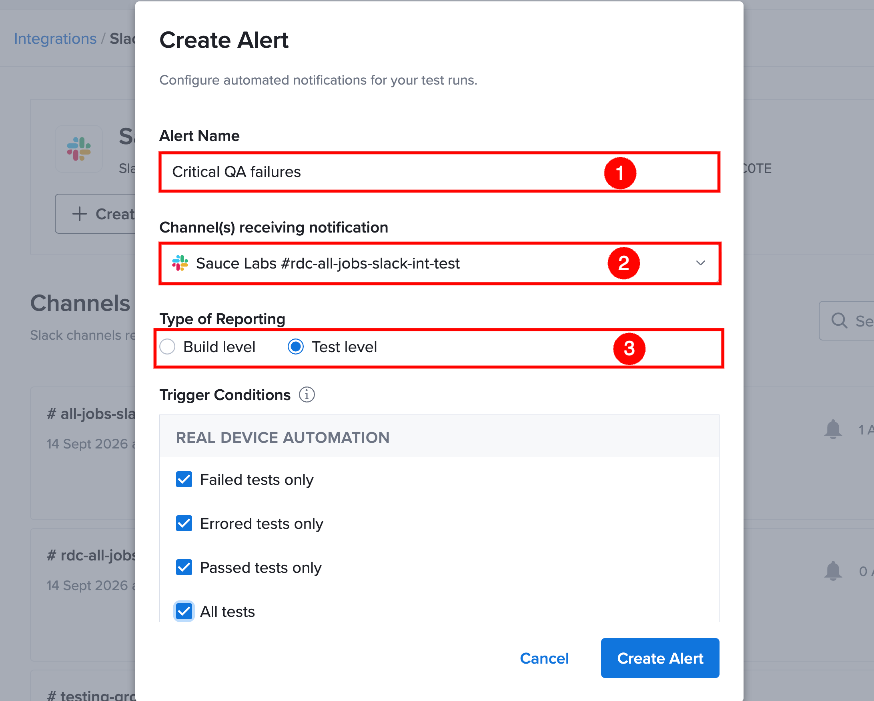
Step 5: Under Trigger Conditions, select the results that trigger the alert for each automation type. See Trigger Conditions.
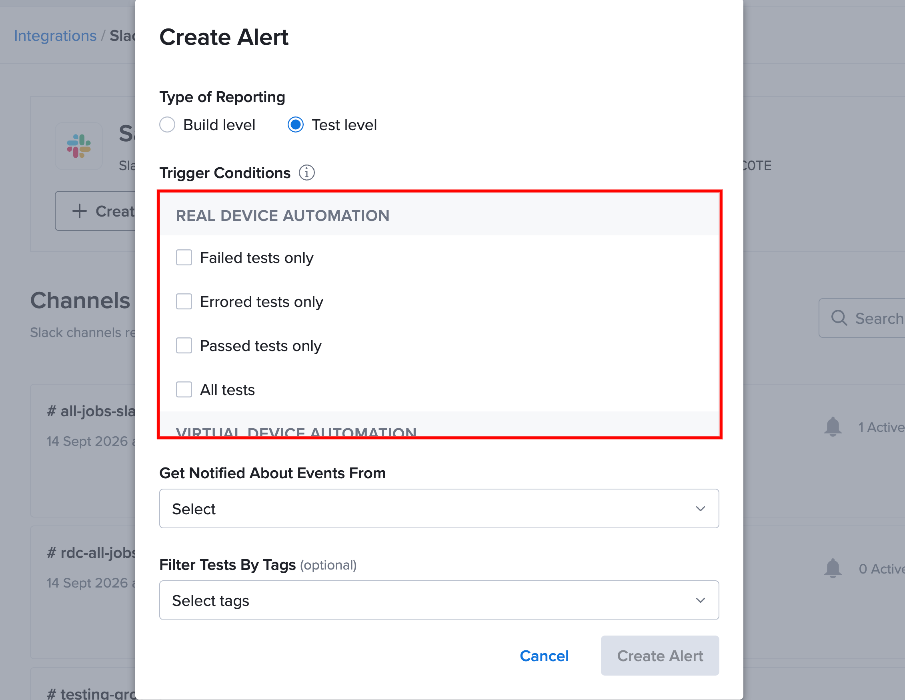
Step 6: Use Get Notified About Events From to choose whose test events trigger the alert. This limits the alert to the test runs that are relevant to your team.
Step 7: (Optional) Use Filter Tests By Tags to limit the alert to specific test results. If you select one or more tags, the alert is triggered only for results that match the selected tags. When you select more than one tag, use Match Rule to define how the tags are combined:
| Match Rule | Description |
|---|---|
| Match any tag (OR) | Tests matching at least one of the selected tags send a notification. |
| Match all tags (AND) | Tests must match every selected tag before a notification is sent. |
Only existing tags are available when you create an alert. You cannot create a new tag from the Create Alert dialog.
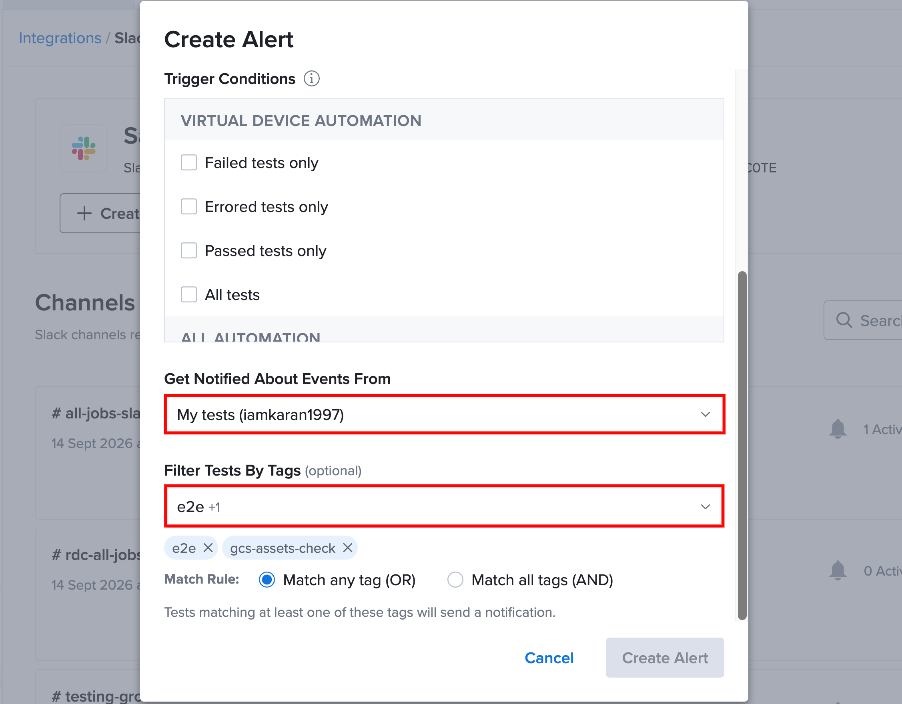
Step 8: Review the alert name, channels, reporting type, trigger conditions, and filters, and then select Create Alert.
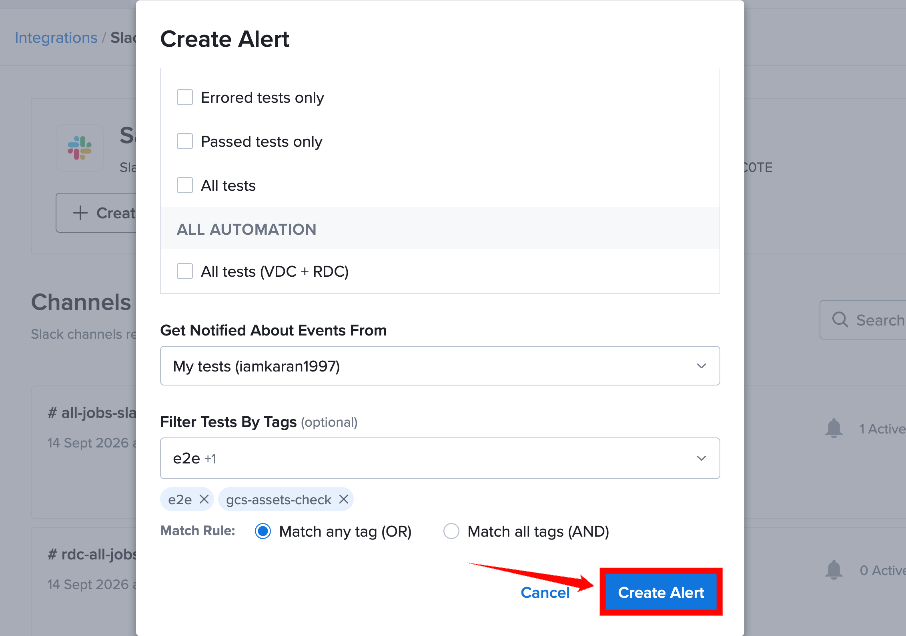
Result: The alert becomes active, and Sauce Labs sends notifications to the selected Slack channels when test results match the configured conditions. The channel entries in the Channels list are updated to reflect the number of Active Alerts.
Manage Alerts
You can also review and create alerts from the Alerts page.
Step 1: Select your profile icon in the top-right corner, and then select Alerts.
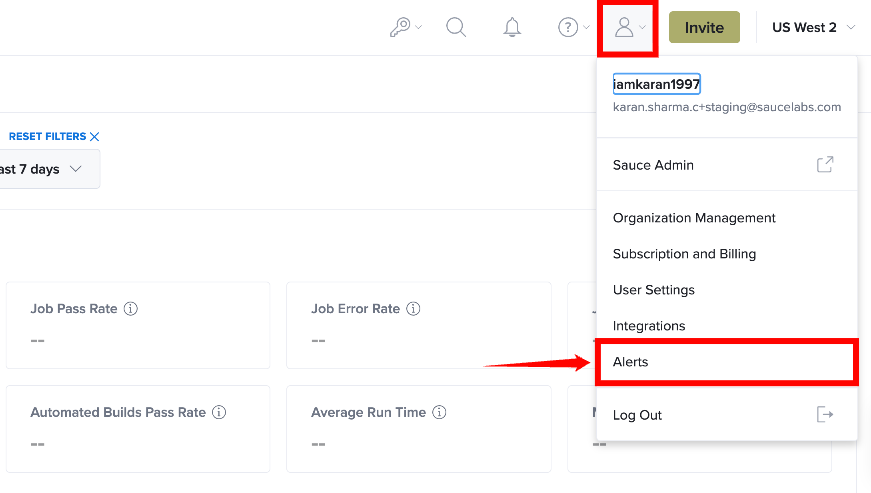
Step 2: The Alerts page displays your existing alerts and available Slack destinations. To add an alert, select Create Alert in the top-right corner and complete the same fields described in Create an Alert.
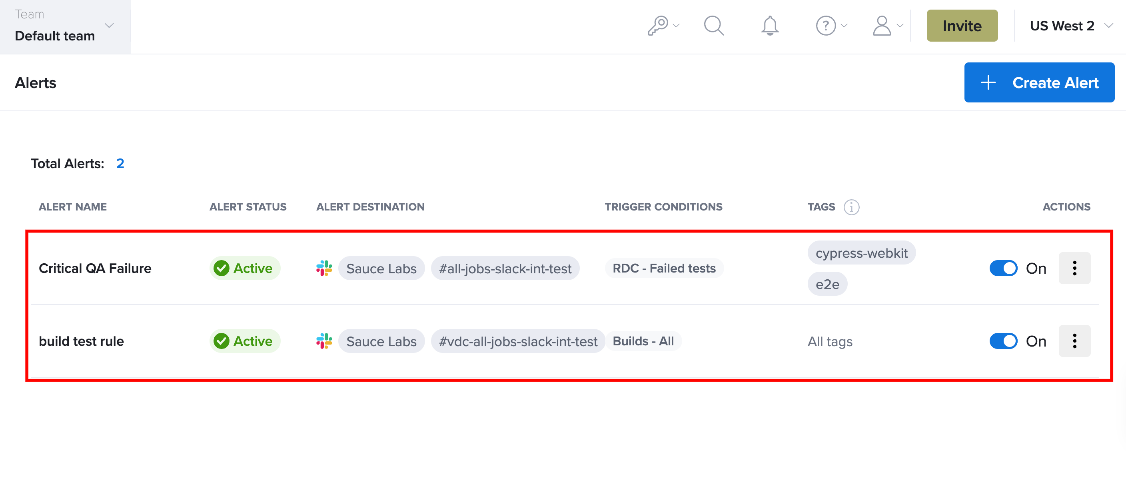
Result: The alert is added to the Alerts page and becomes active. Sauce Labs sends notifications to the selected Slack channels when a test result matches the configured conditions.
Send a Test Result Manually
You can manually send a test result to a Slack channel from the Test Details page. This lets you share a specific test result with your team without creating or modifying an alert.
You must have a connected Slack workspace with an available channel before you can send a test result to Slack. Manually sending a test result does not require an alert and does not change any existing alert configuration.
To send a test result to Slack:
Step 1: Open the Test Details page for the test result you want to share.
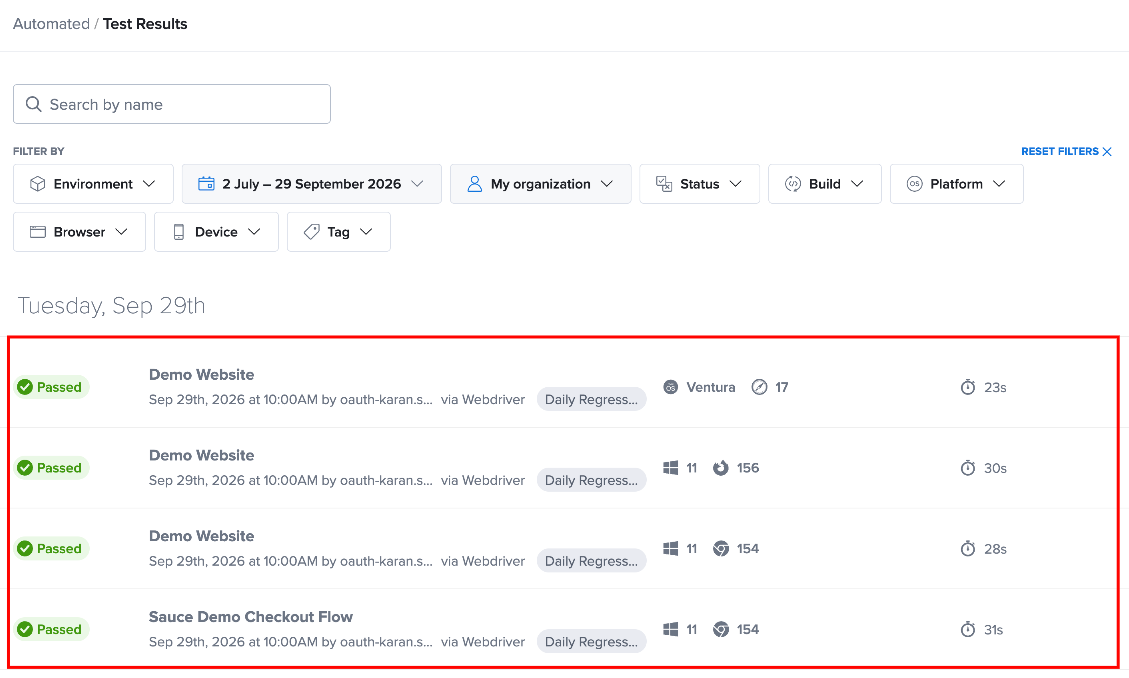
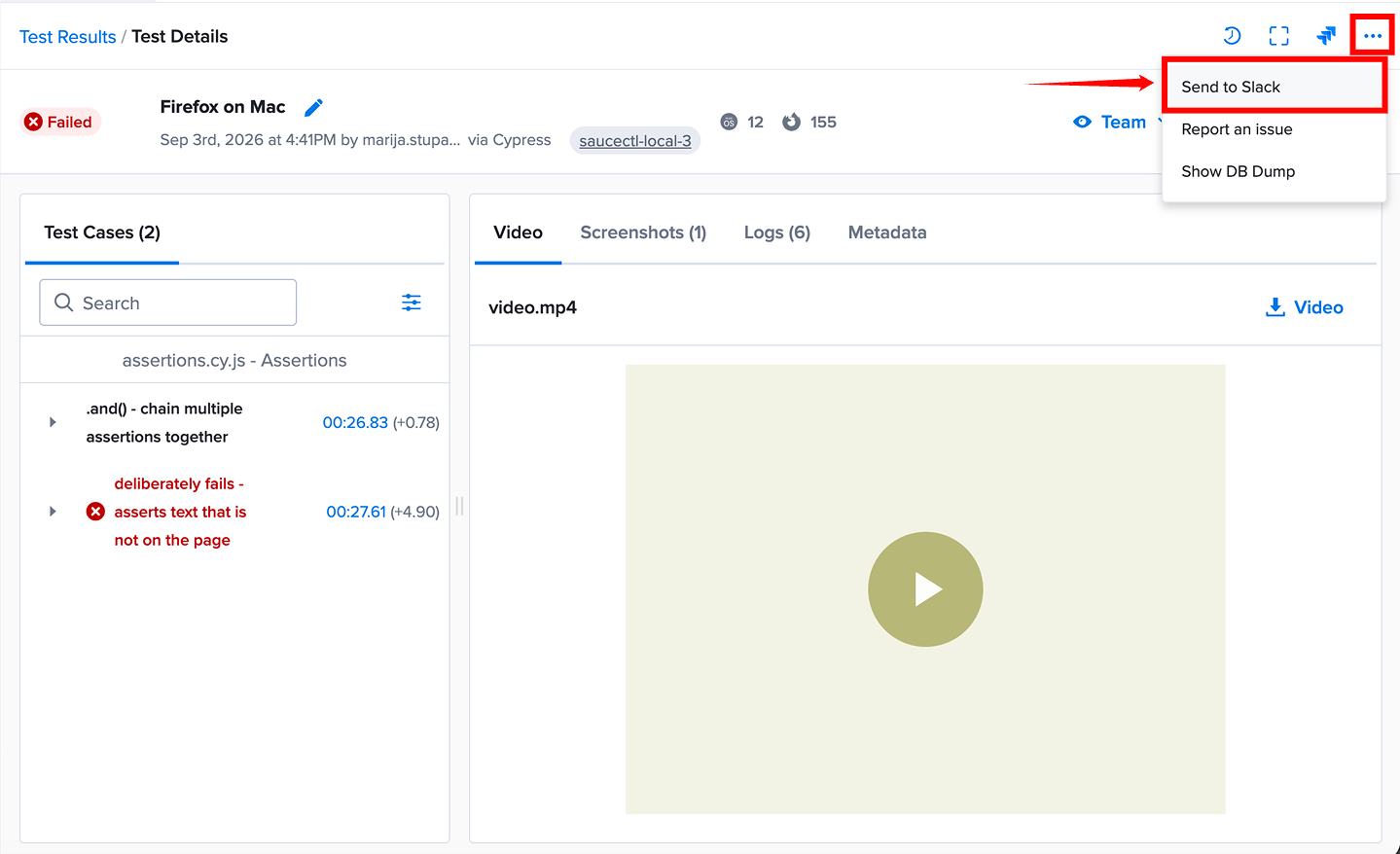
Step 2: Select the Actions menu in the upper-right corner of the page, and then select Send to Slack.
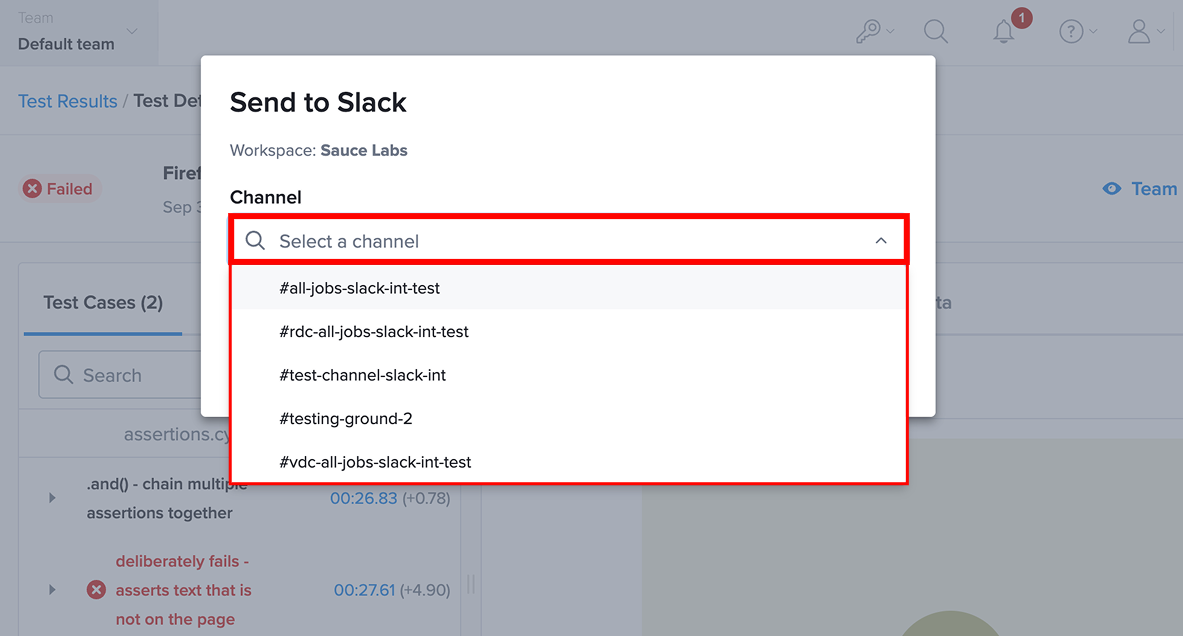
Step 3: In the Send to Slack dialog, select the Channel field and choose the Slack channel where you want to send the test result. Channels where saucebot is not available are shown as unavailable and cannot be selected.
Step 4: Select Send.
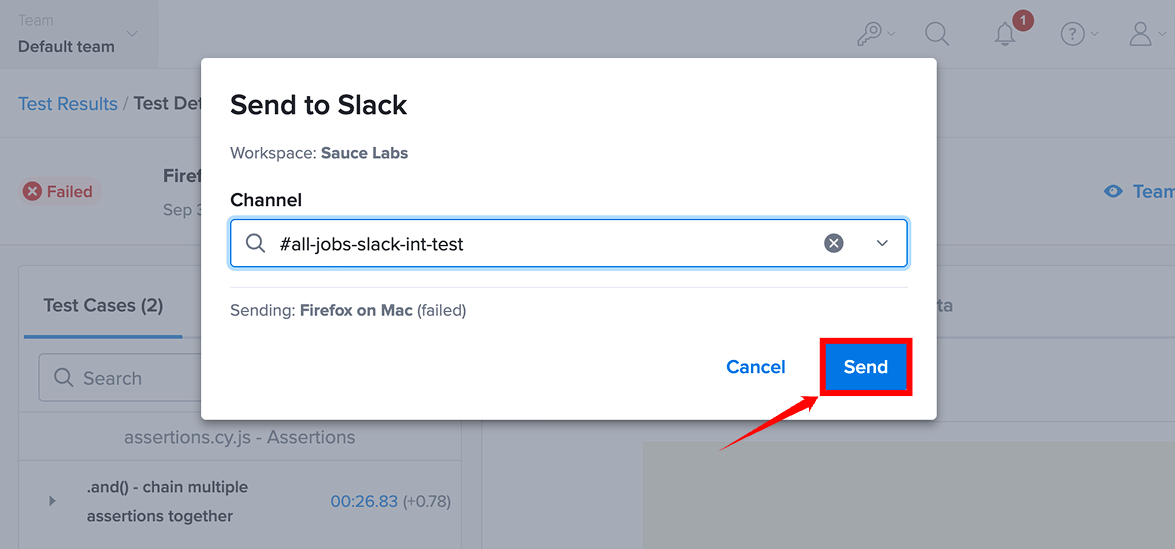
Result: A confirmation message appears on the Test Details page, and the test result appears in the selected Slack channel along with a link back to the result in Sauce Labs.
Manage the Integration
Use the Slack configuration page to review your connected workspaces and channels, remove channels, or disconnect a workspace.
Slack Configuration Page
The Slack Configuration page shows every connected workspace and the channels that receive Sauce Labs notifications. Use this page to add channels, create alerts, and manage the workspace connection.
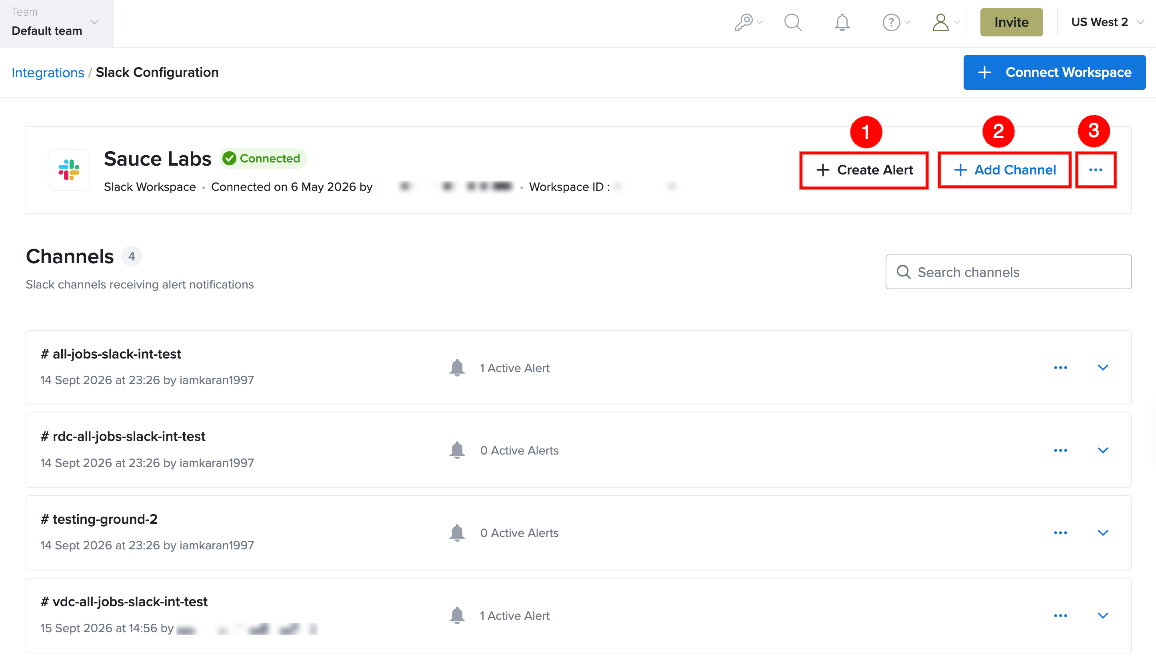
The workspace card displays the workspace name, its Connected status, and the connection details, including the date the workspace was connected, the user who connected it, and the Workspace ID. The card also provides the following actions:
| Ref. | Action | Description |
|---|---|---|
| 1 | Create Alert | Opens the Create Alert dialog, where you define which test results are sent to which Slack channels. See Create an Alert. |
| 2 | Add Channel | Adds a Slack channel to the connected workspace so that it can receive notifications. See Add Slack Channels. |
| 3 | ⋯ (More options) | Opens the workspace menu, which contains the Disconnect option. See Disconnect a Slack Workspace. |
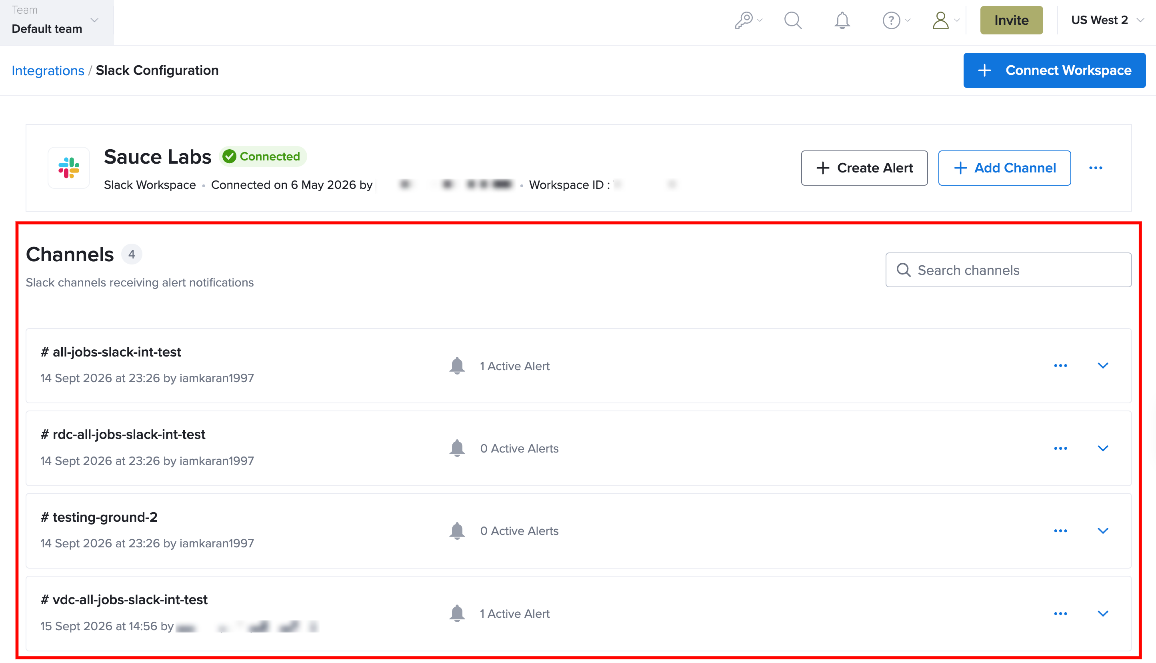
The Channels section lists the Slack channels that receive alert notifications, along with the total number of connected channels. Each channel entry shows:
- The channel name.
- The date the channel was added and the user who added it.
- The number of Active Alerts currently configured for the channel. Expand the channel entry to view the alerts associated with it.
- A ⋯ (More options) menu that contains the Remove channel option.
Use the Search channels field to filter the list when a workspace has many connected channels.
Remove a Slack Channel
If you no longer want a channel to receive Sauce Labs notifications, remove it from the connected workspace.
Step 1: In the Channels list on the Slack configuration page, find the channel you want to remove.
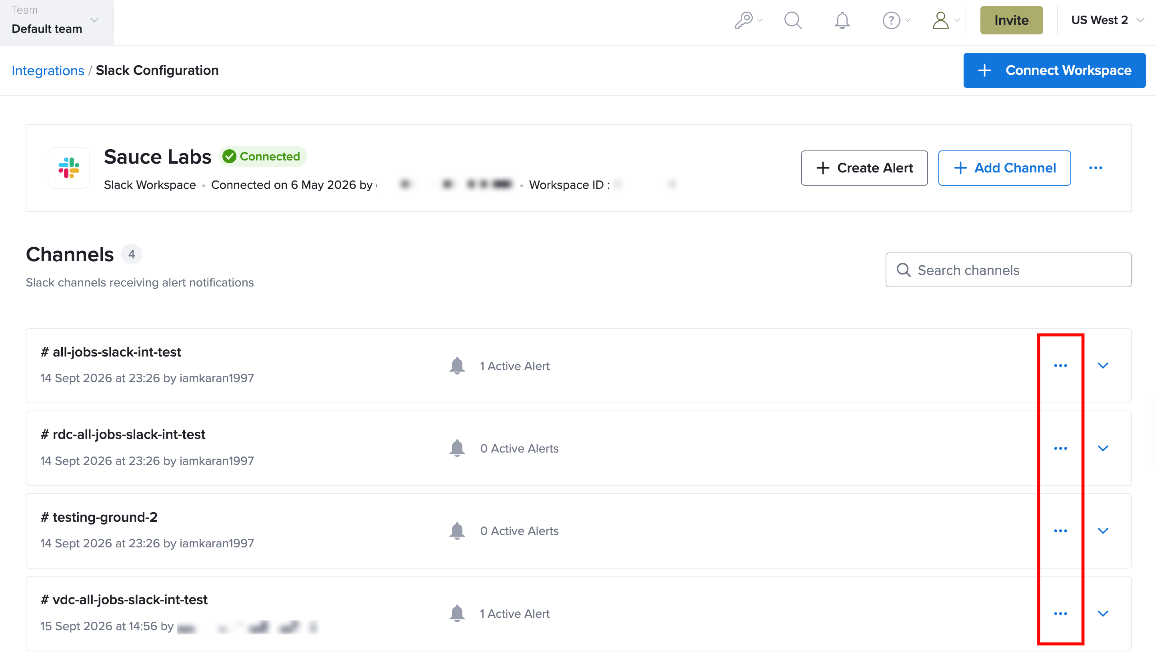
Step 2: Select the ⋯ (More options) menu next to the channel, and then select Remove channel.
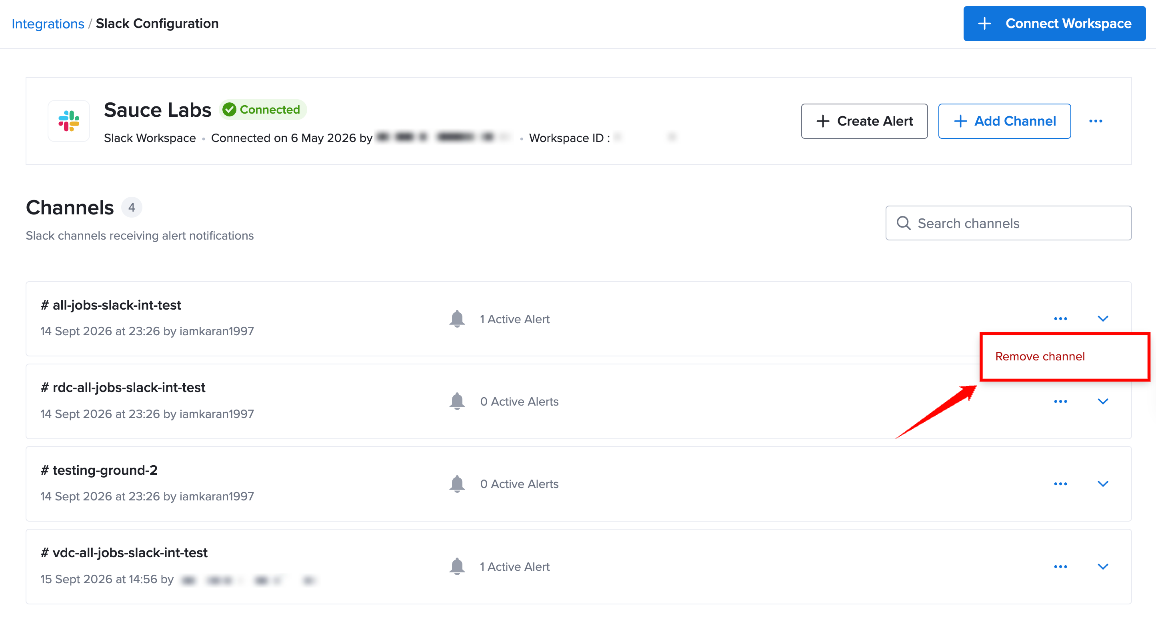
Result: The channel is removed from the list of connected channels and is no longer available as a destination for Slack alerts. Alternatively, you can remove saucebot from the channel in Slack to stop receiving alerts in it.
Removing a channel does not disconnect the Slack workspace. Other channels connected to the same workspace remain configured.
Disconnect a Slack Workspace
Disconnect a Slack workspace when you no longer want Sauce Labs to send notifications to that workspace. Disconnecting a workspace removes its connection from Sauce Labs and prevents the integration from sending alerts to its Slack channels.
Step 1: On the Slack configuration page, locate the workspace you want to disconnect.
Step 2: Select the ⋯ (More options) menu on the workspace card, and then select Disconnect.
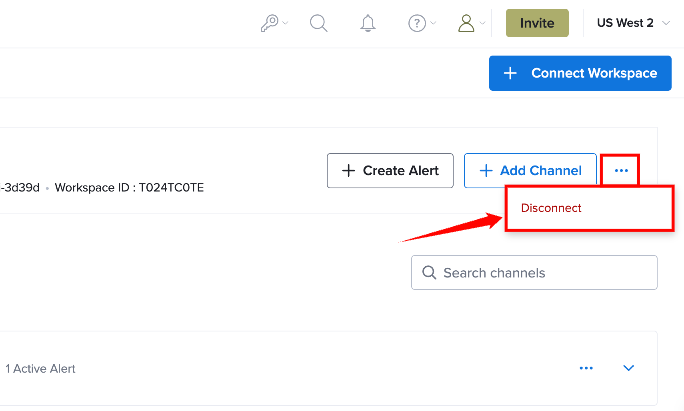
Result: The workspace is disconnected from Sauce Labs, and saucebot is also disconnected from your Slack workspace. Other Slack workspaces connected to your Sauce Labs organization remain unaffected.
Alert Reference
Each alert combines two settings that control what your Slack channels receive. The reporting type controls how results are grouped into messages, and the trigger conditions control which test results send a notification. Use the following sections to choose the options that match how your team reviews test results when you create an alert.
Reporting Types
| Reporting Type | Description |
|---|---|
| Build level | Sauce Labs sends one aggregated notification for the build instead of a message for each test. |
| Test level | Sauce Labs sends a notification for each individual test result. |
Trigger Conditions
Trigger conditions are grouped by automation type, so you can send different results from different automation types to the same channel:
- Real Device Automation: Tests that run on real devices.
- Virtual Device Automation: Tests that run on emulators and simulators.
- All Automation: Tests from all automation types.
For each automation type, you can select one or more of the following conditions:
| Event | Description |
|---|---|
| Failed tests only | Sauce Labs sends a notification only when a test fails. |
| Errored tests only | Sauce Labs sends a notification only when a test ends in an error. |
| Passed tests only | Sauce Labs sends a notification only when a test passes. |
| All tests | Sauce Labs sends a notification for every test result, regardless of status. |
Troubleshooting
If the Slack integration does not work as expected, use the following solutions to resolve common issues.
You cannot authorize the Sauce Labs app in Slack
A channel does not appear in the Add Channel list
A channel is shown as unavailable in the Send to Slack dialog
A channel stopped receiving alerts
Notifications are not sent for some test results
A tag is not available in the Create Alert dialog
Next Steps
- Learn how to read your results in Viewing Test Results.
- Learn what each status means in Test Status.
- Add tags to your tests so you can filter alerts. See Test Annotation.
- Send Backtrace error reports to Slack with Backtrace Integration for Slack.